
After removing any clutter, trash, or unnecessary items from your vehicle, it’s time to deep-clean your vehicle for a fresher ride this spring. You can ensure your cabin’s air is cleaner by replacing the cabin air filter and using a microfiber cloth and spray to dust and clean your vehicle’s steering wheel, cabin air vents, dashboard, and other surfaces that commonly attract dirt and allergens. For an even deeper clean, you can use car vent cleaner to help disinfect your car’s ventilation system and help eliminate any odors from your vents. From there, you can vacuum out your vehicle as well as clean or shampoo seats and floors with carpet and upholstery cleaners to remove crumbs, dirt, and anything else tracked into your vehicle. Lock in your hard work with interior protectants, available as sprays and wipes, to help combat future stains, cracking, or other damage to the upholstered surfaces of your car. Learn more about how to properly clean your vehicle both inside and out and find the car wash, wax, and cleaning products you need to get the job done right.

When you think of “spring cleaning” this may include a home’s baseboards, gutters, or even your wardrobe. However, spring cleaning your car is just as essential to keeping your vehicle looking and running as you’d expect all season long. Akin to performing winter car prep or prepping your boat for summer, springtime brings its own set of unique demands and is a great time to check and maintain your vehicle’s systems for optimal performance. Simple tasks like testing your battery, changing your car’s filters, and inspecting your tires can help ensure your vehicle maintains its value, health, and reliability. Learn more about the importance of spring cleaning for your car below and discover simple tips and tricks to help your vehicle run its best.
Why Should I Spring Clean My Car?
Just like you care for your house as winter turns to spring, you can expect your vehicle to have the same needs in terms of upkeep and maintenance. A rainy day is not enough to keep your vehicle looking clean, and an annual car cleanout may not suffice either — that’s why spring is a great time to prepare your car for the warmer months without dealing with excessively hot or cold temperatures. Spring car prep is more than just tidying up the interior and exterior — tasks like checking your starting and charging systems, ventilation and filters, windshield wipers, and more can help make your vehicle not only safer to drive, but more comfortable to travel in. Not only will your vehicle’s cabin be more comfortable once it’s been cleaned, but making sure your windows, mirrors, and windshield are clear can improve visibility and overall safety. Whether it’s being stored in a garage or driven year-round, all vehicles can use a touch-up both inside and out before taking to the roads — and springtime is a perfect opportunity to check your vehicle for a safer, more enjoyable drive.
Clean Your Vehicle’s Exterior & Interior
Though it’s easy to overlook, cleaning the inside and outside of your car is one of the most impactful routine automotive maintenance tasks that can help your vehicle look better and retain its value. With help from car wash mitts, microfiber cloths and chamois, as well as the right car washes, brushes, waxes, and auto detailing tools, you can restore that like-new shine to your vehicle. Putting in some elbow grease to wash your vehicle not only makes the car look better, it can also make it easier to remove grime or buildup from paint before it causes permanent damage. Not only can you improve your vehicle’s outer appearance, but learning to apply ceramic wax can help you retain that shine you worked so hard for. Remember, it’s also important to clean your tires and wheels to avoid damage from brake dust, road debris, and other contaminants. Not only does cleaning your car include washing the outside as well as the tires, but the interior of your vehicle can be just as important to overall cleanliness and maintaining its value. If you are cleaning or detailing a car that isn’t a daily driver, a car cover may be a worthwhile investment to maintain a clean look without the hassle.
Cleaning the inside of your vehicle not only makes it more comfortable for all passengers, but this can also provide cleaner air, less mess, and may improve your visibility through the windshield, mirrors, and windows.

Inspect Your Wiper Blades
With spring comes more rain, making it even more important to inspect your vehicle’s windshield wiper system and wiper blades to ensure that you can see clearly and drive safely. Your vehicle’s wipers help clear moisture, pollen, and other debris from your windshield, and are necessary to ensure proper visibility. Though there are a variety of types of wiper blades, they all have the same goal of keeping your windshield clear and easy to see through. Windshield wipers are not designed to last forever, and should be replaced every six months, or at the interval recommended in your owners manual. Time, exposure to water, extreme temperatures, and use can cause the rubber of your wiper blades to crack, split, or flake off. If you need new windshield wipers, you may notice skipping, streaking, or a squeaking sound during operation, which can quickly decrease your visibility and safety. If you live in an excessively cold or wet climate, your windshield wipers may fail earlier than normal or the rubber blade of the wiper may suffer increased damage, so be sure to inspect your wipers and keep in mind the signs that you need to replace wiper blades. Changing your car’s wiper blades is a simple, straightforward task that can restore your visibility and confidence while driving. Ensure winter hasn’t damaged your wiper blades with a quick inspection and keep your vehicle road-ready this spring. Unsure where to start when buying wipers? Check out our helpful guide on how to choose the best wiper blades for your vehicle so you can make a quick, lasting repair.

Inspect & Test Your Car Battery
No one wants to try to start their vehicle and only to hear the sound of the starter clicking — but inspecting and testing your battery can help you avoid a springtime breakdown. Extremely hot or cold temperatures can affect your car battery’s cranking amperage, which can easily leave you stranded with little warning. If you’re wondering, “Why won’t my car start?”, you can check our article, and then use these helpful tricks to keep your battery performing as you expect.
You can test your car battery yourself by using a multimeter to check the voltage of your battery. If your vehicle is off, a healthy battery should read 12.6 volts, whereas a vehicle that is running with a healthy alternator should read between 13.7 and 14.7 volts. Keep in mind that even a battery that has appropriate voltage may still not have the cranking amperage required to start your vehicle, and that’s why a specialized load tester should be used to confirm that the battery is working as it should.

If you don’t feel confident testing a car battery or don’t have the right tools, O’Reilly Auto Parts offers free battery testing — whether your battery is still in your vehicle or brought into one of our many locations. If your vehicle’s battery has the correct voltage, you will then want to inspect your battery’s terminals for any signs of corrosion or damage. Battery terminal corrosion is a result of battery acid contacting the metal terminals, and can affect your car’s performance and starting ability. If you notice a white-blue granular buildup near these terminals, use a battery cleaning brush and a mix of 1 cup warm water and 1 tablespoon of baking soda to eliminate corrosion. While battery corrosion may not warrant a new car battery, it’s important to remove any corrosion to keep your battery delivering the correct amount of electric current to start your vehicle.
Inspect And Replace Dirty Filters
With weather likely changing from cold to warm, spring is a great opportunity to perform simple repairs or maintenance tasks without sacrificing your comfort. The filters in your car are crucial to delivering contaminant-free fluids and air to your vehicle’s engine and cabin to keep your car performing as it should. There are filters for your air, fuel, and oil, which are all designed to trap contaminants before they reach your vehicle’s engine for better performance and to limit the risk of clogs or damage. Replacing filters is a big part of routine car maintenance, and symptoms of a clogged filter shouldn’t be ignored. Signs of a bad filter in your vehicle vary by system, but any clogged filter can decrease engine performance and fuel economy, and a clogged oil filter could cause a metallic or ticking noise related to a drop in oil pressure that should be addressed immediately. A general rule of thumb is that fuel filters should be changed every 20,000 to 40,000 miles, and air filters should be replaced annually or every 15,000 to 30,000 miles, whichever comes first. As for oil filters, these should be replaced during each oil change, usually at around 3,000 miles for vehicles with conventional oil and 5,000 miles for vehicles using synthetic oil – though these recommendations can vary by manufacturer and should be confirmed in your owners manual. If you notice a dirty filter or decreased performance, you can change your car’s filters more often than recommended if necessary. Before performing any filter changes, be sure to check your owners manual for vehicle-specific information about replacement procedures, specifications, and intervals.

Replace Dim Or Burned Out Car Light Bulbs
Although the sun may set later in the day, proper visibility is crucial to your and others’ safety while on the road. Headlights, tail lights, brake lights, and turn signal lights are not only required by law when driving, but can help others see you and understand your intended direction, including alerting other drivers when you are slowing down or turning. Other lighting systems, such as cabin lights, can make seeing the inside of your vehicle at night much simpler. Just like all light bulbs, the bulbs that are operated by your vehicle’s interior and exterior lighting systems will likely fail over time depending on their age, amount of use, and other factors. Your vehicle’s bulb lifespan may differ if you have halogen, HID, or LED bulbs, since LEDs can last almost five times longer than traditional halogen light bulbs. If you’re not sure what lighting option to choose for your vehicle, learn about the differences between LED and HID bulbs to help make an informed decision and complete your bulb replacement.
Checking your car’s lighting in the spring can ensure that your bulbs and other electrical components are healthy enough to withstand increasing temperatures and continue to work all season long. Extremely cold temperatures can damage a car’s light bulbs, fuses, sockets, and more, making warmer weather a great opportunity to check the health of your vehicle’s lighting components. Variations in climate can also weaken your car’s light bulbs, increasing the chances of cracking, brittleness, and water damage or corrosion. Your bulb’s filament can also be damaged or fail due to vibrations, bumps, and rough terrain that you may encounter. Flickering is a tell-tale sign that your car’s light bulbs may need to be replaced, which may be caused by a failing filament, switch, fuse, or a loose electrical connection.

| Do It Right Tip: A sign that your turn signal bulbs are close to burning out include rapid blinking when you use either of your turn signals — if you notice this, be sure to replace your turn signal bulbs as soon as possible to avoid non-functioning lights. |
If your lights are constantly in use, this demand can also cause your bulbs to burn out prematurely. You may also notice your car’s light bulbs seem to be burning out faster than normal, which could be due to high voltage from a bad alternator that delivers too much power, or other electrical system faults. Remember to always install your vehicle’s light bulbs while wearing gloves, since the natural oils on bare hands can create hot spots on the bulb’s glass and increase the chance of premature failure. If you’re looking for more resources, find step-by-step instructions about how to fix dim headlights, choosing the best headlight bulbs, and much more in our How-To Hub.
Check Your Tires
Your tires are always a critical part of keeping your vehicle safe and stable no matter the weather. Colder temperatures, expanding air, road salt, and low tire pressure in the winter can all cause your car’s tires to wear faster than normal, making spring the perfect opportunity to inspect your tires for signs of damage that may have happened over the past few months. If your tires have sustained significant wear, warmer temperatures will only amplify the issue, so it’s important to not skip this important step of routine automotive maintenance. Your car’s tires are not designed to last a lifetime, as rubber and tread patterns will naturally wear over time and with use. This can put you and others in danger if your tires are not regularly inspected and replaced when necessary. That’s why it’s recommended you check your vehicle’s tires at least once a month – increasing your inspections to twice a month during warmer months, and at least weekly in the winter. To make sure your tires are ready for spring, inspect your tires for signs of damage, baldness, exposed belts or threads, or a lack of tire tread — these can lead to a flat tire, blowout, or hydroplaning during rain and other spring weather. Not only can unhealthy tires put you and others in danger, they can also eventually cause damage to your vehicle’s steering and suspension systems if ignored.
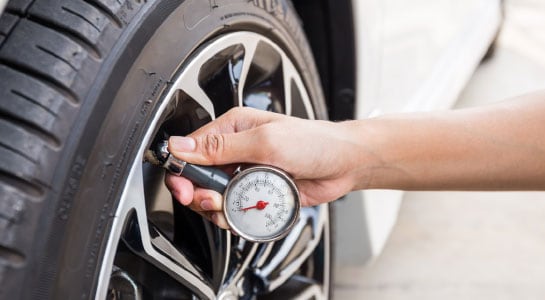
If there is no visible damage to your tires and the tread is above 2/32”, use a tire pressure gauge and check your tire pressure to ensure parts like your tire valve stem and tire valve stem caps are in good condition. Not only does maintaining the correct tire pressure improve fuel economy and handling, but it can also prevent damage to the tire’s tread and sidewall for prolonged service life. Your owners manual should include the inflation pressure specifications, and it may also be listed on your driver’s-side door. Both under- and over-inflated tires can bring their own set of issues, and inflation problems should be resolved before you get on the road to prevent damage or an accident while driving. Taking the time to ensure the health of each of your car’s tires can help ensure you can maintain control and provide added peace of mind on the road.
Don’t let spring showers dampen your drive. Maintaining and inspecting your vehicle before the seasons change not only helps you keep track of your automotive maintenance, but can also provide added safety, maintain or restore performance, and improve fuel economy. From tires and wipers to filters and appearance, taking care of your car this spring can supply you with a cleaner, healthier vehicle that you can depend on. Shop your local O’Reilly Auto Parts both in-store and online for the best selection of wiper blades, filters for your car, appearance chemicals, and much more to help you get your spring cleaning done right.