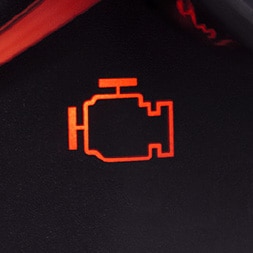
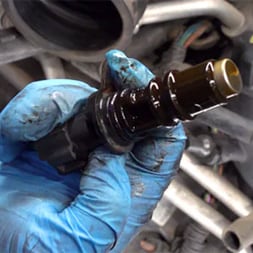
A failing VVT solenoid rarely causes your engine to shut down completely. Instead, it prevents the camshaft from advancing or retarding properly. This causes your engine’s valve timing to be inaccurate at different speeds and loads, which can affect performance and fuel mileage and may cause misfires or other symptoms. Our Professional Parts People recommend having your VVT system checked if you notice:
- A Check Engine Light: VVT solenoid problems commonly trigger camshaft position codes in the P0010 to P0021 range, though the exact code depends on which solenoid and cylinder bank is affected.
- Rough or Unstable Idle: If the engine idles roughly or fluctuates in RPM, incorrect camshaft timing can be throwing off how smoothly the engine runs at low speed.
- Ticking or Tapping Noise: A clogged or failing solenoid can cause a ticking noise from the top of the engine as oil pressure and valve timing become inconsistent.
- Reduced Power or Hesitation: Incorrect camshaft timing can make the engine feel sluggish or hesitant, especially during acceleration.
- Lower Fuel Economy: When camshaft timing isn't adjusting properly, your engine may run less efficiently, and you experience a drop in gas mileage.
Our parts professionals can scan and read your Check Engine light for free using O'Reilly VeriScan®. Stop by your local O'Reilly Auto Parts store, and we'll scan your vehicle's computer for the codes related to your VVT system. You’ll receive a report that includes ASE technician-verified solutions, repair options, and suggested parts, helping you understand which solenoid or other part is causing your symptoms.
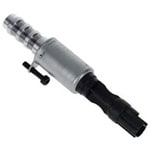 Variable Timing Solenoid
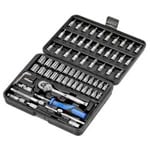 Ratchet & Socket Set
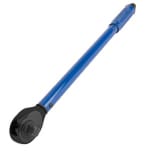 Torque Wrench
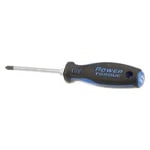 Flathead Screwdriver
 Shop Towels
 Safety Glasses
 Gloves
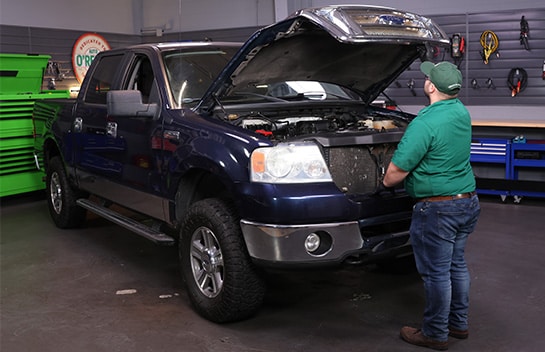
Step 1: Prep & Safety
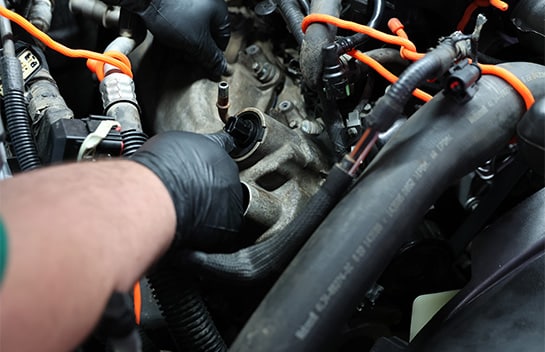
Step 2: Locate the VVT Solenoid
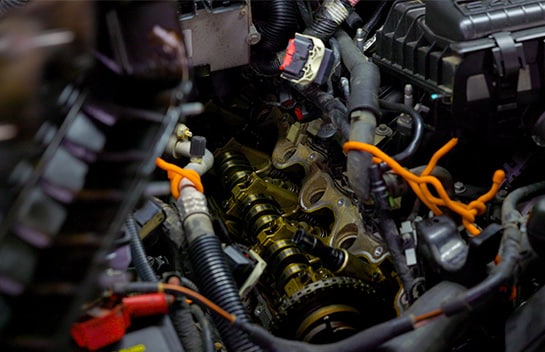
Step 3: Remove the Engine Cover & Disconnect the Wiring Harness
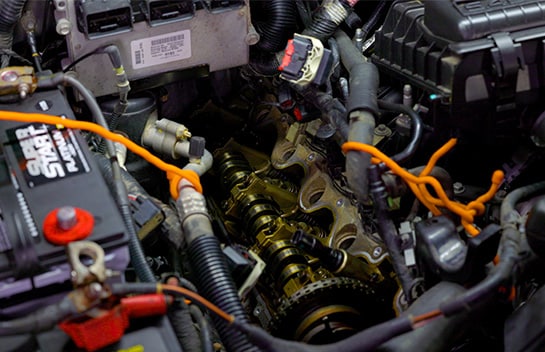
Step 4: Remove the Valve Cover
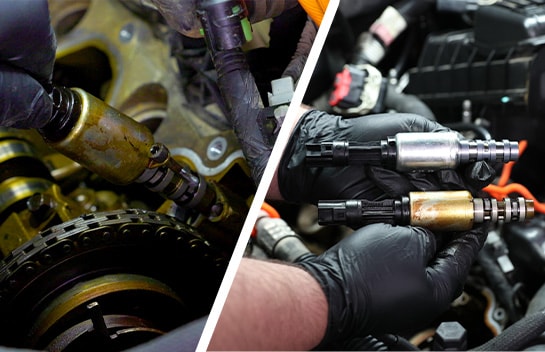
Step 5: Remove the Old Solenoid & Clean the Port
|
Pro Tip: Many VVT solenoids can be turned, wiggled, and pulled out without any prying, but you can use a flathead screwdriver to gently pry it loose if needed. |
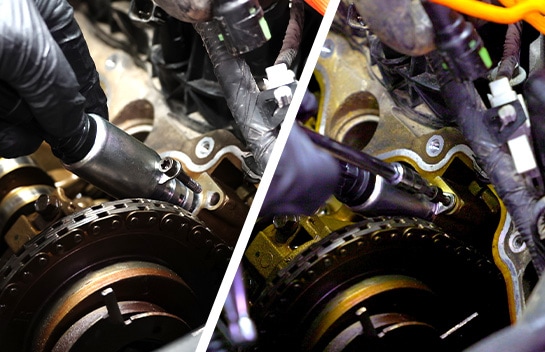
Step 6: Install the New Solenoid & Torque the Mounting Bolt
|
Pro Tip: The specification for the VVT solenoid bolt on a 2006 F-150 is 44 inch-pounds, but always confirm the correct values for your specific engine. |
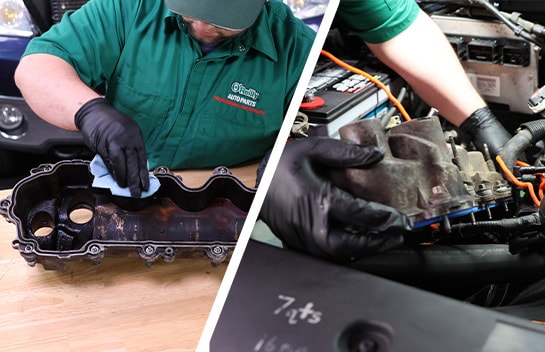
Step 7: Clean & Reinstall the Valve Cover
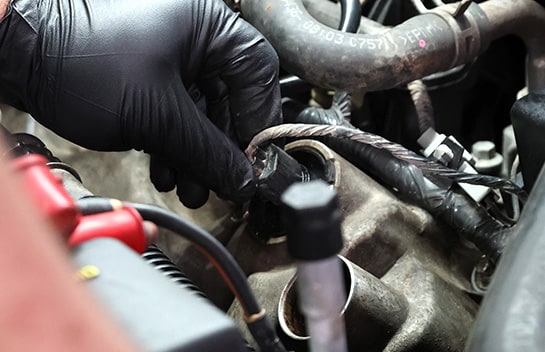
Step 8: Reconnect the Wiring Harness
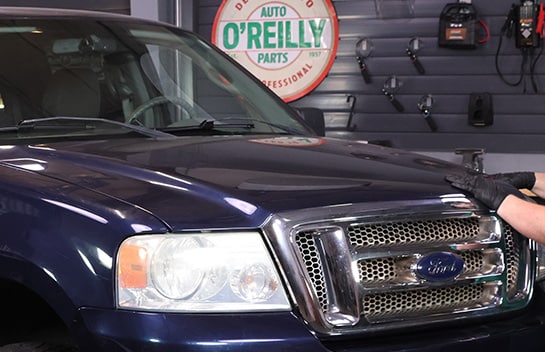
Step 9: Start the Engine & Confirm the Repair
Start the engine and check for leaks. Confirm that any codes or issues you noticed before the repair have been resolved.
If you aren't comfortable replacing a VVT solenoid, stop by your local O'Reilly Auto Parts. We can recommend a professional shop or a Certified Auto Repair Service Center in your area to get the job done right.
What causes a VVT solenoid to fail?
VVT solenoids rely on clean engine oil flowing through small internal passages to work correctly. Old, dirty, or sludge-contaminated oil is one of the most common reasons they stop working, since debris can clog the solenoid's tiny oil passages or screen. Staying on top of regular oil changes is one of the best ways to help prevent this.
Can I still drive with a bad VVT solenoid?
In many cases, yes, at least for a short time, but a bad VVT solenoid affects how well your engine runs and can lead to poor performance, rough idling, and reduced fuel economy the longer it goes unaddressed. If the Check Engine light is flashing rather than solid, it's best to have your vehicle looked at right away, since a flashing light usually signals a more serious problem.
How much does it cost to replace a VVT solenoid?
The cost depends on your specific engine, how many solenoids need to be replaced, and whether you do the job yourself or have a shop handle it. Doing it yourself typically costs less than a shop repair, since you're only paying for the parts. Check with your local O'Reilly Auto Parts or OReillyAuto.com for current pricing on the right VVT solenoid.
| Item | Recommended Product | Purpose |
|---|---|---|
| Variable Timing Solenoid |
Standard Ignition VVT Solenoid | Installed in the cylinder head, where it controls oil flow to the camshaft actuator to adjust valve timing based on engine demand |
| Ratchet & Socket Set |
Power Torque Metric Tool Set | Removes and reinstalls the solenoid fastener, valve cover bolts, and other components |
| Torque Wrench |
Power Drive ½” Drive Torque Wrench | Tightens the solenoid mounting bolt and valve cover bolts to manufacturer specifications |
| Screwdriver |
Power Torque Flathead Screwdriver | Gently pries the old solenoid loose if it doesn't come free by hand |
| Shop Towels |
Sellars Shop Towels | Cleans the valve cover and surrounding area to keep debris out of the cylinder head |
| Safety Gear |
SAS Nitrile Gloves & Safety Glasses | Protects your hands and eyes while working under the hood |