
Any time your battery fails to provide the power needed to start the engine, one of the first things to check is the condition of the battery terminals. Terminals that are especially corroded, loose, or otherwise damaged may not be able to draw the current needed to actuate the starter. Simply using a battery brush and terminal cleaner on corroded terminals may be sufficient, or in some cases, replacement battery terminals may be required if they have suffered damage or erosion that prevents complete contact or tightening.
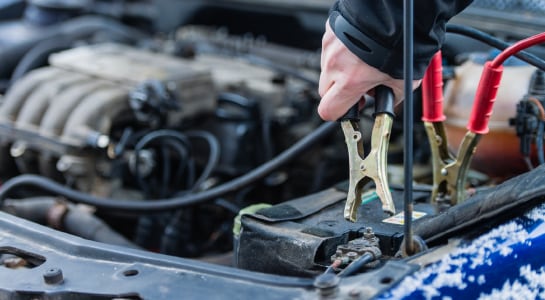
Another trick that may be necessary when attempting to start your vehicle in the cold with a weak car battery is to turn off every electrical accessory you can to ensure as much of the battery’s power as possible is being directed to the starter. This could include the blower motor, radio, any exterior or interior lighting, wipers, and more. Of course if this still isn’t sufficient, a jump-start may be necessary, so being sure you always have a set of booster cables in your vehicle can be a lifesaver if you’re not confident in your battery this winter.

There is no good time for your car's battery to die, but it can be even more inconvenient and uncomfortable when it happens in the dead of winter. No matter how well you care for a car battery, it won’t last forever, and batteries are more likely to stop producing the necessary cranking amperage to start your vehicle in extreme temperatures. That means that summer and winter are both crucial times for battery maintenance. If you’d like to know more about summer battery maintenance, we have you covered, but there are also some specific battery cold weather tips and tricks that might be worth noting before the first cold snap. Read on to learn more about winter battery maintenance.
Why Does Cold Weather Cause Car Batteries to Drain?
Car batteries are relatively simple in design, but due to their chemistry, they aren’t designed to last forever. The battery in your car experiences discharge and recharging every time you start and run your vehicle, and over time that can lead to wear. Eventually the battery will no longer have the capacity or amperage needed to crank the engine. Cold weather adds even more stress to your battery, and winter weather can certainly expose damage that may not have been notable before the temperatures dropped.
Charging and discharging a battery consists of a chemical reaction that takes place inside the battery case. Your car battery has several rows of lead plates, and is filled with an electrolyte solution that contains battery acid, also known as sulfuric acid. Electricity being applied to the battery causes the ions in the electrolyte solution to undergo a chemical bonding process that stores the power, and to lose their charge as the battery voltage is depleted. This results in a dead battery if it is not consistently recharged.
Over time, some of the water that is diluted in the electrolyte can evaporate due to the extreme heat of the summer and leaks from the battery case. This results in the plates being partially exposed, which may allow them to corrode, and is the reason some manufacturers of open-cell car batteries recommend that they occasionally be refilled with distilled water. The loss of electrolyte reduces the battery’s overall ability to hold a charge, but it may still perform adequately until it is exposed to extreme temperatures again. So the damage done to a battery in the summer can actually affect the battery’s ability to perform in the winter by reducing its available cold cranking amps.
What is Battery CCA (Cold Cranking Amps) Rating?
Cold cranking amps, labeled as CCA on your battery case, is an abbreviation used to dictate the amount of current available from the battery to start your engine in cold weather. The rating is actually based on temperatures of 0 degrees Fahrenheit and 30 seconds of cranking, and the requirement for this rating is that the battery must not have dropped below 7.2 volts at the end of this test. In simpler terms, how much current your vehicle draws at 0 degrees Fahrenheit determines how many cold cranking amps you will need to start it. Most vehicles have a specific battery type and group size recommended by the manufacturer, and batteries that are designed to fit the vehicle appropriately will also have at least the minimum CCA requirements when they are new. It’s not possible to have too high a CCA rating in your vehicle, but the more cold cranking amps, the more likely the engine is going to start in extremely cold weather.
As the battery wears out, the amount of cold cranking amps available under a load is also reduced, and eventually the battery may fail to turn the engine. Cold weather can reduce your battery’s power by 30 to 60 percent, and if the battery is already damaged, it is unlikely it will continue to work in more extreme conditions. This is why your battery may seem to work fine throughout the summer and fall, but as soon as you have a below-freezing morning, your car won’t start. This is why when battery testing is performed, it places the battery under load to determine its true power output in more extreme situations.
Car Battery Winter Use
Though there isn’t much that can be done about a battery that may have already suffered damage in the heat of the summer, there are a few ways you can help make sure that your battery is ready to deliver reliable performance this winter. The first, and easiest, way to be certain your battery is ready for winter is to stop by your local O’Reilly Auto Parts, where our parts professionals will happily perform a free battery test. This test places the battery under a load and provides a report of its remaining capacity. If it has discharged, they can also charge a battery before testing to be certain that it has failed before you replace it. If the battery is no longer usable, they can help you find the best car battery or other vehicle battery to keep your starting system reliable all year long.
A few factors, in addition to the battery’s condition, can also contribute to your starting ability in the cold. Oil thickens inside the engine in the cold and thins as it reaches operating temperature, but using the right weight of oil and ensuring the engine oil level is appropriate can actually make it easier to start in any season. A lack of oil in the engine increases internal friction and drag, forcing your already depleted battery to work harder than it should have to, so it’s crucial that you keep an eye on your oil levels this winter to prevent failed starts in the cold. If you need conventional or synthetic oil for an oil change or top off, you can shop motor oil for your vehicle online.

If you live in an extremely cold climate, there are additional steps that can be taken to keep your battery ready for action on even the coldest mornings. Heated battery blankets or other car battery heaters are an option that keep the battery at a higher temperature, allowing current to flow more easily. In many cases these can be coupled with engine block or oil heaters to ensure that you have adequate oil flow to reduce the internal friction that can prevent your battery from starting your engine.
Car Battery Winter Storage
If you won’t be using your vehicle much or at all this winter, or if you’re storing a seasonal-use vehicle like a classic car, ATV or UTV, motorcycle, or lawn mower, you can take precautions to ensure that your battery is ready to go the next time you are. The most important part of storing a battery for the winter is keeping it charged. If possible, the battery should be disconnected from the vehicle to prevent ground drains or electrical accessories from discharging the battery. The longer a battery is discharged, the less likely it will be that it can hold adequate charge in the future.
The best approach to keep your battery charged and maintained this winter is to use a battery maintainer. Battery maintainers are simply a battery charger that detects battery voltage and charges them slightly before turning off again. This ensures that the battery is always fully charged, preventing the risk of wear or damage while the battery isn’t being used. This can be accomplished with the battery in or out of the vehicle, but your maintainer may have to work more frequently if the battery is still connected to the vehicle. If you want to learn more about battery maintainers, check our video on how to use battery chargers and maintainers.
If you do choose to remove the battery from your vehicle, it is also best if it is stored not only indoors, but in a more stable environment while the maintainer works to keep it charged. Avoid leaving batteries anywhere that they might get especially hot or cold. If possible, storing the battery in a basement or attached garage where the temperature is somewhat regulated can help ensure that your battery is in the same condition at the end of winter as it was at the start.
The most important part of winter battery maintenance is being sure of the battery’s condition before winter is here. Storing and recharging an already weak battery for the winter doesn’t make the battery any better the following season, so be sure and take advantage of free battery testing at O’Reilly Auto Parts. Our line of Super Start batteries covers everything from cars and trucks to heavy-duty and commercial vehicles, motorcycles, ATVs, and lawn tractors to ensure consistent starting power no matter the season. We also carry a variety of battery tools, terminals, and battery chargers and maintainers to help get you ready for the cold weather ahead. And of course, don't forget to have your battery tested for free at your local O'Reilly Auto Parts. It only takes a few minutes and can provide peace of mind that your battery will last through the winter and keep your vehicle starting consistently.