

There are a few common maintenance “must-do’s” that every car owner is told can prevent their car from ending up in a repair shop. Some of these suggestions have been around for decades. But exactly how true are these maintenance tips? A few of the most commonly-known “helpful tips” you may have heard your entire life have actually been proven to be maintenance myths. In some cases, following this advice can diminish the value of your vehicle, could result in unneeded repairs, or may simply not provide any benefit and waste your time. O’Reilly Auto Parts has compiled a list of the most common automotive maintenance myths to help you better understand how to keep your vehicle on the road. Read on to learn the difference between vehicle facts and common repair traps.

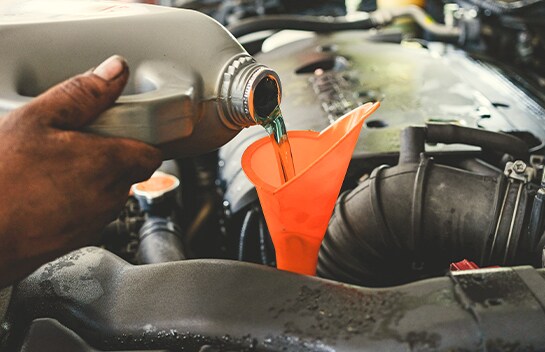
Oil is one of the most essential fluids in your vehicle, and is responsible for protecting your engine from wear and overheating, lubricating a number of moving parts, and enhancing overall vehicle performance. It’s important to know how to properly change and check your engine oil, and you can find additional guidance in your owners manual. Listed below are some of the most common oil maintenance myths.
Myth: “Change Your Oil Every 3,000 Miles”
Don’t get us wrong – staying up to date on your vehicle’s oil changes is definitely great maintenance advice. However, it is often suggested that you should change your car’s oil every 3,000 miles. While this might have been true in years past, most newer models made within the last decade don’t require oil changes until you reach about 5,000 miles on your odometer. When properly maintained, some vehicles can even make it to 7,000 miles before an oil change is required. With the help of innovative, high-efficiency synthetic oils and modern engine designs, engine oil life is longer than ever, and barring any internal engine issues or oil contamination, your motor oil can be perfectly usable for much longer than 3,000 miles. This doesn’t mean you shouldn’t still check your oil level and condition frequently, because older engines can always develop a leak or other problems and may need more frequent oil changes or top-offs. For specific oil change guidelines and accurate oil change intervals, refer to your vehicle’s owners manual or service manual. While you likely don’t need to change your oil as often as every 3,000 miles, it is critical to your engine’s health that you follow the recommendations in your service manual and observe your manufacturer’s oil change interval. In our article, you can learn more about what happens if you go too long between oil changes. For more information on selecting the right oil for your vehicle and how to change your oil, check out our other helpful How-To articles for step-by-step instructions and more details.
Myth: “You Can’t Use Synthetic Oil in Older Vehicles”
The idea that you can’t use synthetic oil in older vehicles has become widely accepted, but is not accurate. Modern synthetic oil is completely safe, and often beneficial to use in all engines, makes, and models, regardless of the vehicle’s age. These new oil formulas are tested and proven to work efficiently in a variety of automotive engines, ranging from classic cars to the newest models in the market. This common myth likely comes from a time when synthetic oils had not yet been widely tested. However, using synthetic oil in your older vehicle will likely prove to be an upgrade and can provide maximum protection and lubrication. If you have questions about different synthetic oil formulas, our Professional Parts People® can help you better understand your oil options.
Myth: “Once You Switch to Synthetic, You Can’t Go Back”
Switching to synthetic oil doesn’t mean you can never go back to conventional oil, regardless of what this myth might lead you to believe. While synthetic oils do provide better engine sludge protection and enhanced performance when compared to conventional oils, switching back and forth between the two will not damage your engine. If you’re wondering “What’s the difference between synthetic and conventional oil?”, our article can answer that and any other questions you may have about synthetic oil. But as for this myth, you can be confident that switching between conventional and synthetic motor oil formulas won’t pose any threat to your vehicle’s health.

We’ve all probably heard at least once in our lives that paying extra at the pump for premium fuel is better for your car, and that using higher-octane fuel will increase its performance. Unfortunately, this fuel tip is actually a myth. Regular fuel won’t harm your vehicle’s engine, and is often recommended by the manufacturer for proper performance. Premium fuel does in some cases contain cleaners, fuel additives, and other protectants, but all fuel is required to meet quality standards to ensure it’s safe to put in your vehicle. While it won’t harm your engine to use premium fuel every once in a while, spending the extra money isn’t really necessary. Typically, the only cars that would truly benefit from the extra octane of premium fuel are equipped with high-performance engines. So unless you drive a sports car or an older vehicle with a high-compression engine, your vehicle will be good to go with regular-grade fuel. You might still find yourself wondering “But what’s the difference between regular and premium fuel?”, and our article can provide you with more information about gasoline octane.

While it is true that engine components need to warm up to operate at their best, starting your car and letting it idle before driving won’t necessarily speed that process up. Most modern engines actually heat up faster while you’re driving your vehicle, not while it is sitting in the driveway with the engine running. There are several key parts in your vehicle, such as your transmission and engine, that take a long time to fully heat up and run their best if the vehicle isn’t being driven. If anything, letting your car idle for long periods of time just wastes fuel, and can be costly if done often. While we don’t blame you if you want to start your car and let the interior warm up on those frigid winter mornings before your drive to work, just keep in mind that it isn’t necessary to warm the vehicle up before driving to protect it from damage.

It’s definitely not uncommon to see your neighbors washing their cars with water and dishwashing soap. Many car owners see it as a great way to save some money by using what they already have at home, rather than taking a trip to the store to purchase car wash soap. While this may seem tempting, it is definitely not recommended. If you’re wondering “Why can’t I use dish soap to wash my car?”, you’re not alone in asking that question. While you may have used dish soap in place of car wash soap before and not noticed any immediate harmful effects, your car’s paint can end up looking faded or damaged with frequent use. Dish soap is an abrasive soap made for removing grease and food, which means it’s not meant for automotive paint and can oxidize the finish. Washing your car with dish soap can actually damage the wax, clearcoat, and even rubber surfaces, and can leave your paint looking dull. Car wash and exterior detailing supplies are designed to protect your vehicle’s finish, and contain chemicals that are not only minimally abrasive, but also provide more lubrication so that your wash mitt or sponge glides smoothly across the finish. For tips on how to clean your car at home or how to detail a car yourself, visit our How-To Hub to learn more. O’Reilly Auto Parts carries a variety of car wash and automotive wax products to not only make your car look fresh and clean, but to also protect its value, finish, and appearance.

If you ever have to jump-start your car, it’s essential to remember that your battery isn’t immediately fully charged after being jumped. While jump starters can send enough voltage to your battery to get the vehicle started and running again, it doesn’t fully recharge the battery. It can take running the engine and alternator for a few hours to restore the battery’s charge after being jumped, and even longer in colder temperatures. After jumping your car, we recommend having your battery tested and recharged as soon as possible. Relying on the alternator to recharge a dead battery can damage the alternator, and if you jump start your vehicle and only drive it for 10, 15, or even 30 minutes afterward, your battery could be dead the next time you go to start your car. Knowing how to properly care for your battery, and how to pick the right battery for your car, can help keep your vehicle starting reliably day after day. If you’re having trouble starting your car, it might be time to replace your battery. Stop by any O’Reilly Auto Parts store and have your battery tested for free by our Professional Parts People. We can also help you find a replacement battery that’s right for your car, and can even install many batteries for free.
While transmission fluid myths might not be as widespread as motor oil myths, there are still a few inaccurate maintenance tips floating around to be aware of. Always make sure to follow the instructions in your owners manual when flushing and refilling your vehicle’s transmission fluid.
Myth: “Flush and Refill Your Transmission Fluid Every 50,000 Miles”
Flushing and refilling your transmission fluid is an important maintenance task, but it doesn’t necessarily need to be completed every 50,000 miles. Most modern vehicles use improved, high-efficiency transmission fluid engineered to last much longer than the transmission fluid available in the past. Some newer transmission fluid formulas last up to 100,000 miles before needing to be changed, and can potentially last as long as the vehicle itself. While modern vehicle technology and transmission fluid formulas can prolong your fluid life, it is always important to check your owners manual for the specific transmission fluid service intervals for your vehicle. Regularly inspecting the transmission fluid level and condition can also help you determine if and when your transmission requires service outside of the recommended interval. Learn how to properly check and refill transmission fluid to be prepared for your next scheduled maintenance.
Myth: “Changing Your Transmission Fluid Can Cause Transmission Failure”
You may have also been told that changing your transmission fluid can cause transmission failure. This is another maintenance myth that likely came about because changing burned transmission fluid does not solve the problem that caused it to burn in the first place, often leading vehicle owners to incorrectly believe that the transmission fluid is the cause of the problem. Changing your transmission fluid is likely not the cause of any transmission issues you are experiencing, and worn or damaged transmission fluid is usually an indicator that another part of your transmission is failing or damaged. If you choose to change your transmission fluid, inspect its color, take note of any odors, and check for grit or metal shavings in the fluid. If the transmission fluid smells burnt or is especially dark, thick, or gritty, it is often a sign that the transmission itself requires repair or service. As long as you follow the recommended intervals and service instructions in your owners manual, flushing and changing your transmission fluid will not harm your transmission.

Your tires have valuable information on their sidewalls. One piece of information that might be a bit misleading is the maximum pressure listed on the side of the tire. This number is not the pressure level for your specific vehicle, but rather the maximum pressure level for the tire in general. The same size and type of tire can be used on a variety of vehicles, so the tire has to be able to support the pressure level needed for each of these applications. The pressure level listed on the side of your tire lists the maximum amount of air your tire can hold, and is not a suggestion of how much air to put in your tire. We know this can be a bit confusing and might leave you asking “Where can I find the tire pressure level for my car?” Recommended tire pressure levels can always be found in your owners manual, or are often listed on a sticker located on your driver's side door. For helpful tire pressure tips, check out our How-To article.

While it is important to regularly check and monitor your coolant level, it isn’t necessary to flush and refill your coolant every time you change your oil. Coolant typically doesn’t need to be replaced as often as motor oil does, so you are essentially flushing and wasting perfectly good coolant, which can be rather costly. However, you do need to be aware of the recommended antifreeze service interval for your vehicle, as coolant is essential to your engine’s health and performance. If you go too long between coolant flushes, you put your car at risk of overheating, and could potentially cause some more costly repairs. If it’s time to flush and refill your antifreeze, our How-To video and instructions can walk you through the steps to make sure you get the job done right.

These are only a few of the most common maintenance myths that could lead you to spend unneeded money and perform unnecessary repairs on your vehicle. We hope this helps you feel more prepared and in-the-know when it comes to the maintenance needed to keep your car running at its best. For a list of recommended routine maintenance tasks and how often you should perform them, take a look at our article to make sure you’re staying up-to-date on your maintenance checklist. If you don’t feel comfortable tackling some of these jobs on your own, we are also happy to recommend a local shop to make sure you’re vehicle maintenance is taken care of. You can also find all of the parts and tools you need to get the job done at O’Reilly Auto Parts.
Did you enjoy this article, or do you have feedback about this or other How-To content from O'Reilly Auto Parts? Take a quick survey to tell us what you'd like to see next.