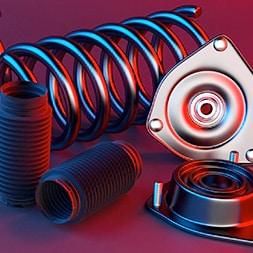
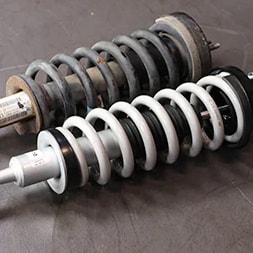
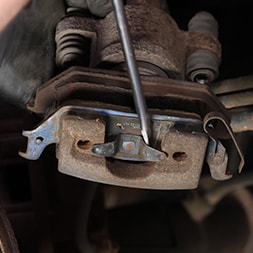
Shock absorbers typically last between 50,000 and 100,000 miles, gradually losing their damping ability as internal seals and valving wear down rather than failing all at once. Our Professional Parts People recommend inspecting your rear shocks if you notice:
- A Bouncy or Rough Ride: If the back of your Ford F-150 keeps bouncing after a bump instead of settling quickly, the shocks aren’t controlling the leaf springs’ motion the way they should.
- Swaying or Body Roll in Turns: Worn rear shocks can’t control body movement as well, so your truck may lean or sway more than usual through corners.
- Excessive Squatting Under Acceleration: If the rear end of your truck dips down noticeably when you accelerate, especially with a load in the bed, the shocks may no longer be controlling weight transfer properly.
- Uneven or Cupped Rear Tire Wear: When a shock absorber can’t keep the tire pressed evenly against the road, the tire bounces slightly as you drive, wearing the tread unevenly in a pattern called cupping.
- Clunking Noise Over Bumps: Worn shock mounts or bushings can clunk or knock when the rear suspension compresses over bumps.
- Fluid Leaking from the Shock Body: Shocks rely on hydraulic fluid to control damping. An oily film on the shock body usually means a seal has failed and the shock has lost its damping ability.
 Shock Absorber
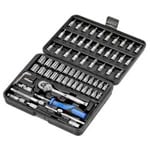 Ratchet & Socket Set
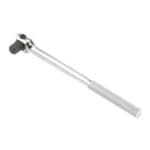 Breaker Bar
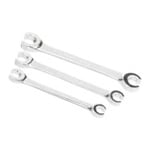 Wrench
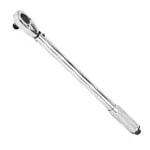 Torque Wrench
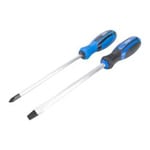 Flathead Screwdriver
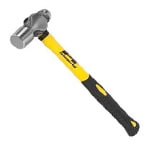 Hammer
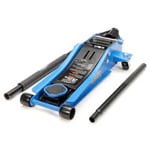 Floor Jack
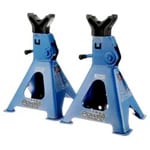 Jack Stands
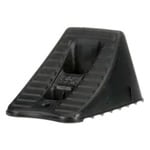 Wheel Chocks
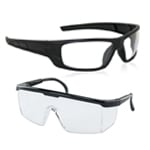 Safety Glasses
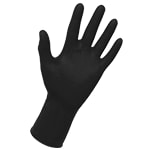 Gloves
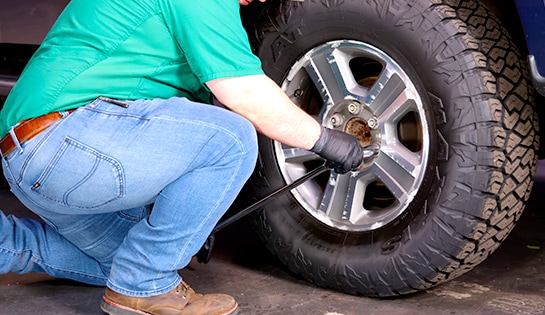
Step 1: Prep & Safety
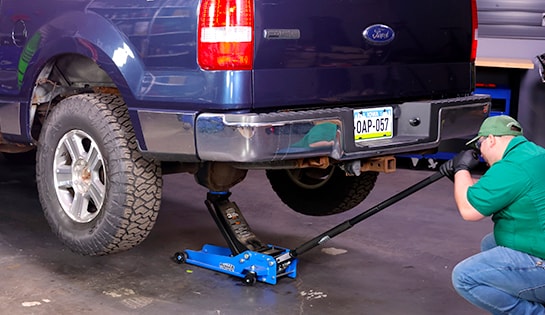
Step 2: Lift & Support the Back End
|
Pro Tip: If you have enough clearance under the truck, it may not be necessary to lift the vehicle or remove the wheel, as the shock absorbers can often be serviced at ride height. |
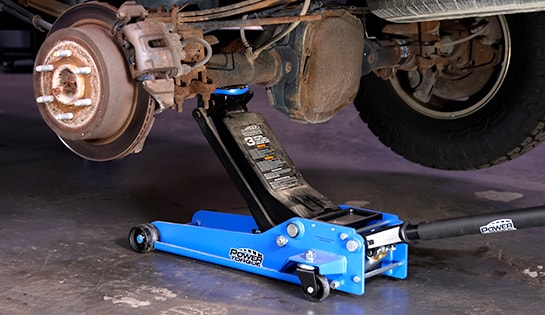
Step 3: Support the Axle
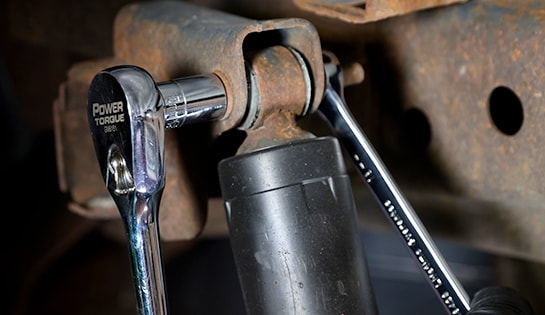
Step 4: Remove the Top Shock Absorber Nut
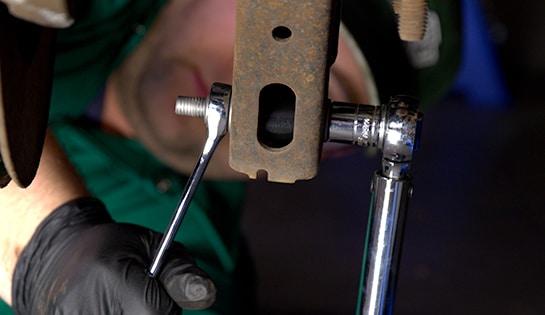
Step 5: Remove the Bottom Shock Absorber Bolt
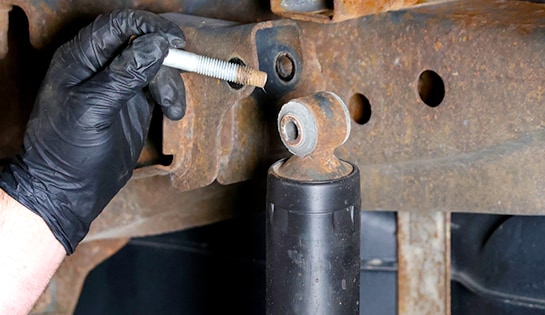
Step 6: Remove the Shock Absorber
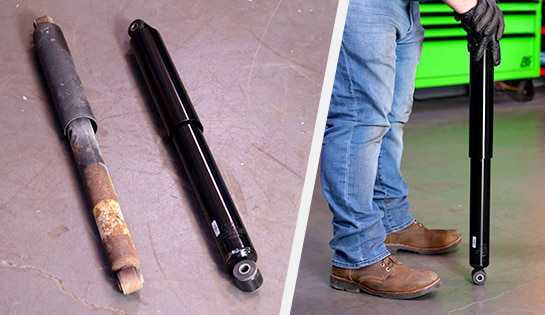
Step 7: Compare & Prime the New Shock Absorber
|
Pro Tip: Discard the old nuts and bolts rather than reusing them. Fasteners like these can lose some of their clamping force or corrode over time, so picking up a new set along with your shock absorbers helps ensure a secure connection. |
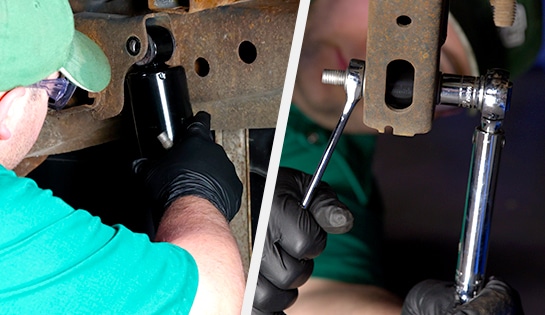
Step 8: Install the New Shock Absorber
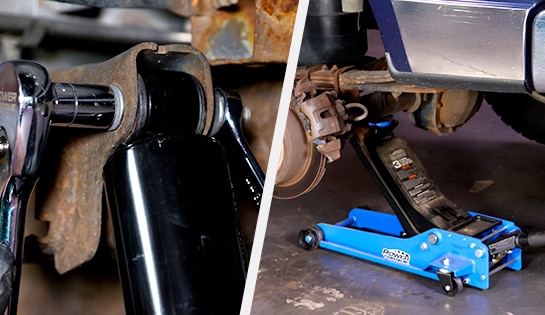
Step 9: Torque the Fasteners & Repeat on the Other Side
|
Pro Tip: Shock absorbers should be replaced in pairs, so repeat these steps on the other side. |
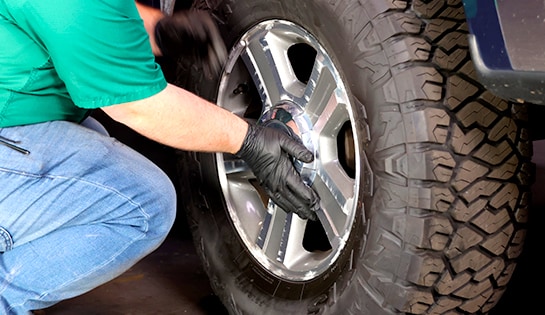
Step 10: Reinstall the Wheels & Torque the Lug Nuts
How much does it cost to replace rear shock absorbers?
The cost depends on your specific Ford F-150, the brand and grade of shock absorbers you choose, and whether you do the job yourself or have a shop handle it. Doing it yourself typically costs less than a shop repair, since you’re only paying for the parts. Check with your local O’Reilly Auto Parts or OReillyAuto.com for current pricing on the right shock absorbers for your truck.
How do shock absorbers work?
Shock absorbers work like small oil pumps. As your suspension moves, a piston inside the shock forces hydraulic fluid through tiny openings, which controls how quickly the suspension compresses and rebounds after a bump. Without that resistance, your leaf springs would keep bouncing long after you hit a bump, making the truck harder to control and wearing your tires unevenly. Shocks don’t support your truck’s weight the way springs do; their job is purely to control motion.
Are adjustable shocks a good option for a Ford F-150?
Adjustable shock absorbers let you fine-tune damping stiffness, which can help if you regularly switch between towing, hauling heavy loads, and everyday driving with an empty bed. A standard replacement shock absorber is more than enough for most daily driving, but if that switching happens often, an adjustable or heavy-duty shock may be worth the upgrade. Our parts professionals are happy to discuss which option best fits how you use your truck.
| Item | Recommended Product | Purpose |
|---|---|---|
| Shock Absorber |
MasterPro Shock Absorber | Mounts between the frame and rear axle to control how quickly the suspension compresses and rebounds over bumps |
| Ratchet & Socket Set |
Power Torque Ratchet with 15mm & 21mm Sockets | Loosens and tightens the shock mounting bolts and the wheel lug nuts |
| Breaker Bar |
Power Torque ½” Drive Breaker Bar | Loosens lug nuts on the rear wheels before lifting the truck |
| Wrench |
Power Torque 18mm Wrench | Holds the top shock nut steady while the bolt is loosened, and holds the bottom bolt while the nut is removed |
| Torque Wrench |
Power Drive ½” Drive Torque Wrench | Tightens the shock fasteners to 66 ft-lbs and the lug nuts to 150 ft-lbs |
| Screwdriver |
Power Torque Flathead Screwdriver | Removes the hubcaps before loosening the lug nuts |
| Hammer |
Performance Tool Hammer | Taps the bottom mounting bolt out of the shock bracket once the nut is removed, if needed |
| Lifting Equipment |
Power Torque Jack, Jack Stands, & Wheel Chocks | Secures the front wheels, lifts and supports the rear of the truck, and supports the axle while the shock is disconnected |
| Safety Gear |
SAS Nitrile Gloves & Safety Glasses | Protects your hands and eyes while working under the truck |