Warning Sorry, you're using a web browser that is no longer supported. For the best experience please upgrade or visit the site on another browser.
Skip to content

Check Engine Light DTC Code P0496: Evaporative Emission System High Purge Flow

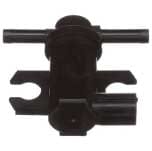
Diagnostic trouble code P0496 refers to “Evaporative Emission System High Purge Flow”. The evaporative emissions (EVAP) system on your vehicle traps fuel vapors to prevent them from venting to the atmosphere, and purges accumulated vapors to the engine to be burned in the cylinders. This system includes a canister which stores fuel vapor, and a purge valve that is used to release the fuel vapors to the intake when prompted by the engine computer. If the purge valve is not closing fully or staying open too long, you might experience a code related to an EVAP system purge flow issue.

Issues related to a P0496 code can often include:

  • EVAP purge solenoid or valve
  • EVAP fuel pressure sensor
  • EVAP system hose
  • Powertrain Control Module (PCM) failure
  • Shorted wire/poor electrical connection
  • Purge flow sensor
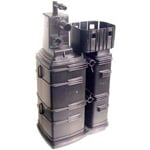
  • Charcoal canister

P0496 Code Repair: Common Parts and Tools

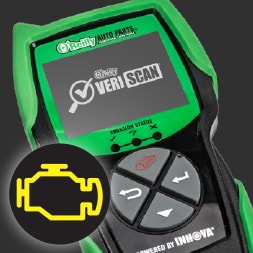
The necessary parts and tools to clear this Diagnostic Trouble Code (DTC) might differ depending on your vehicle's make and model. If your Check Engine light is illuminated, stop by any O’Reilly Auto Parts and get an O’Reilly VeriScan® for your car, truck, or SUV and get a detailed VeriScan report with more information about your vehicle’s Diagnostic Trouble Code(s), along with possible causes and repair solutions. If you aren’t comfortable making these repairs yourself, our parts professionals can recommend a local shop to make your repair.

What Does a DTC P0496 Code Mean?

OBD-II fault code P0496 means “Evaporative Emission System High Purge Flow”. This means the evaporative emissions, or EVAP system on your vehicle, which is designed to capture, store, and purge raw fuel vapors, is experiencing abnormally high purge volume. In simpler terms, fuel vapors are being purged from the system when they likely shouldn’t be, which can cause the vehicle to run rich or perform poorly.

P0496 Code Diagnosis

When you experience a P0496 diagnostic trouble code, your vehicle may be experiencing failure in one of a few areas:

  • EVAP purge solenoid or valve
  • EVAP fuel pressure sensor
  • EVAP system hose
  • Powertrain Control Module (PCM) failure
  • Shorted wire/poor electrical connection
  • Purge flow sensor
  • Charcoal canister

P0496 OBD-II Code Symptoms

Aside from a Check Engine light, you may notice performance problems, black smoke from your tailpipe, or poor fuel economy.

Additional symptoms of a P0496 Code can include:

  • Check Engine light
  • Decreased engine performance
  • Trouble starting the vehicle

Can I Drive With a P0496 Code?

Even though your vehicle will still run and you may not even notice any symptoms, it’s important to have this code diagnosed as soon as possible to avoid more serious issues down the road.

Diagnostic Trouble Code FAQ

What does DTC mean?

DTCs, or Diagnostic Trouble Codes, are generated by data collected by your vehicle’s onboard diagnostics system, or OBD system, and trigger your Check Engine light by identifying problems with one or more of your vehicle systems. DTC codes help explain what the issue is and where it is located.

Learn more about DTC codes


What are the most common DTCs?

Some of the most common DTCs include:

  • P0300-Random or Multiple Cylinder Misfire Code
  • P0301 through P0308- Single-Cylinder Misfire Codes
  • P0446- Evaporative Emissions Control System Codes
  • P0455- Evaporative Emissions Control System Codes-Leaks
  • P0420 or P0430- Catalyst Efficiency Codes
  • P0141- Oxygen (O2) Sensor Codes
  • P0171 or P0174- Lean Code
  • C0221- Wheel Speed Sensor

Can I clear DTCs?

To clear DTCs, you can use an OBD-II code reader to scan and clear the codes. However, this will only temporarily turn off your Check Engine light. If the problem is bigger than a code or sensor reset, the Check Engine light will likely reactivate.

Related Resources