Winter driving can be unpredictable, and even careful drivers can get stranded when their car is stuck in snow. Vehicles often lose traction on icy roads or deep snow, leaving wheels spinning. Clearing snow around the tires, using traction boards, ice melt, or recovery straps, and gently rocking your car back and forth can safely restore motion.
With step-by-step techniques and essential winter tools from O’Reilly Auto Parts, you can regain control quickly, protect your vehicle, and stay safe on snowy roads. Knowing how to get your car out of snow without causing damage or further complications is key to staying safe and confident in winter driving.
Cars typically get stuck due to loss of traction on snow or ice. Common causes include:
- Snow or ice packed under drive wheels
- Snow under the undercarriage lifting the vehicle slightly
- Frozen layers of ice reducing tire-to-road contact
Understanding why your car is stuck helps you select the right solution. For example, spinning wheels excessively can dig tires deeper, making the problem worse. Using proper traction tools from O’Reilly Auto Parts helps you regain control safely.

Instead of a simple checklist, think of this as a step-by-step strategy:
1. Assess the Situation
Before trying to free your vehicle, take a moment to evaluate your surroundings and determine whether it’s safe to proceed.
-
Check if you’re on flat ground or a slope.
If your car is stuck on a steep hill or icy incline, attempting to drive out can cause the vehicle to slide or spin uncontrollably. In these cases, it’s often safer to stop and call for roadside assistance or a tow truck. -
Determine how deep the snow is around your tires.
Light to moderate snow may be manageable, but if the tires are buried or the car is resting on packed snow or ice, additional traction or professional help may be required. -
Make sure the exhaust pipe is completely clear.
Snow or ice blocking the exhaust can cause dangerous carbon monoxide to build up inside the vehicle.
Tip: Never rev or run the engine for extended periods if the exhaust is blocked. Clear snow away from the tailpipe before starting the car and recheck it frequently.
2. Clear Snow From Tires and Undercarriage
Use a compact or foldable snow shovel from O’Reilly Auto Parts to remove snow from around the tires and under the car. Clearing a path in front and behind the wheels gives your car a chance to gain traction.
Pro Tip: Avoid using your hands or improvised tools — they can cause injury or damage.
3. Add Traction
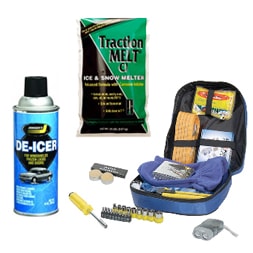
- Place traction bords under your tires (available at O’Reilly Auto Parts).
- Sprinkle ice melt or driveway de-icer for added grip.
- Use recovery straps if another vehicle can assist safely.
4. Use Controlled Rocking
- Shift slowly between drive and reverse.
- Apply gentle acceleration, avoiding sudden bursts.
- Keep wheels straight to reduce resistance.
- Stop if tires spin excessively.
Controlled rocking builds momentum without straining the engine or transmission. Using traction tools from O’Reilly Auto Parts improves success and safety.
5. Move Forward Gradually
- Straighten your wheels and accelerate slowly.
- Avoid flooring the gas — it can dig tires deeper into snow.
- Re-engage traction control if it was turned off.
- Proceed cautiously until reaching clear ground.
Safety Tip: Never try to force movement on steep inclines without proper assistance.

Being prepared can prevent long delays and keep you safe:
- Foldable snow shovel
- Snow brushes or Ice scraper
- Traction boards
- Recovery or tow straps
- Flashlight, blanket, gloves
- Floor mats or small carpets (for temporary traction if needed)

What should I do if my car is stuck in snow on a highway?
Prioritize safety first: turn on hazard lights, assess traffic, and move as far off the road as possible. Use traction mats or a shovel to improve grip, and if conditions are unsafe, call roadside assistance rather than risking aggressive maneuvers.
Can I get my car out of the snow on my own?
Yes. In many cases, you can free a stuck car by clearing snow from around the tires, adding traction, and using controlled rocking. These methods help regain grip without putting unnecessary strain on the tires, drivetrain, or transmission.
Why does my car seem more stuck after spinning the wheels?
Excessive wheel spin digs the tires deeper and compacts snow into ice, which reduces traction and makes the vehicle harder to move. Slow, controlled movements are far more effective.
Are winter tires or snow chains worth it?
Absolutely. Winter tires and chains provide better grip in heavy snow and ice, significantly reducing the likelihood that your car will get stuck before you need recovery tools.