Warning Sorry, you're using a web browser that is no longer supported. For the best experience please upgrade or visit the site on another browser.
Skip to content

How to Change the Air Filter in a 2013 to 2019 Ford Escape

These step-by-step instructions and video detail how to replace the air filter in your 2013, 2014, 2015, 2016, 2017, 2018, and 2019 Ford Escape. Replacing the air filter removes contaminants from the outside air before it enters your vehicle’s engine, and can improve your car’s engine performance and gas mileage. Your Ford Escape’s owner’s manual will detail the replacement intervals, but if you notice a dirty or clogged air filter or reduced gas mileage, you can replace the air filter more often to ensure optimum performance.


Tools & Materials List

Step by Step Instructions:

Tools & Materials

How to Change the Air Filter in a 2013 to 2019 Ford Escape

Your Ford Escape’s air filter helps trap and eliminate dust, dirt, and contaminants from the outside air before entering your car’s engine. Changing your 2013 to 2019 Ford Escape’s air filter is a simple and fast repair that can improve fuel economy and engine performance. It’s recommended that you change your Escape’s air filter every 12,000 to 15,000 miles, but your car’s service manual will detail the manufacturer’s maintenance intervals. A clogged air filter can cause your car to misfire, make unusual engine noises, or you may smell gas when starting your Ford. Our detailed step-by-step instructions will help you perform an air filter installation on your 2013 to 2019 Ford Escape easily to help keep your car running its best.If you’re not completely comfortable doing this yourself, we’d be happy to recommend a professional technician in your area.

Prepare Your Car

The Ford Escape’s hood is open.

Step 1: Locate Your Air Filter

Park on a level surface and open the hood. The air filter housing is on the driver’s side of the engine bay, and is secured by four bolts.
Four photos showing Collin using a ratchet and socket to remove the four bolts securing the air filter housing lid.

Step 2: Remove Air Filter Housing Bolts

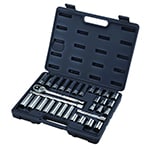
Use a ratchet and 8mm socket and extension and remove the bolts.
Collin lifts the air filter housing lid, exposing the old air filter.

Step 3: Lift the Housing Lid

Once the bolts are removed, lift the air filter housing lid to access the air filter.

Remove Old Filter

Collin lifting and removing the old air filter out of the housing.

Step 4: Remove Old Filter

Remove the old filter and clean any leaves or debris inside the housing.

Install New Filter

Collin installing the new air filter into the housing. Collin installs the filter carefully to make sure it’s properly seated.

Step 5: Install the New Filter

Install your new air filter, making sure it’s properly seated.
Step 6: Reinstall the Housing Lid
Reinstall the air filter housing lid by reversing the steps you took to remove it. Start by sliding the tabs into place. Replace the four bolts to secure the lid. Once completed, you can close the hood.

Additional Resources

These step-by-step instructions and video detail how to replace the air filter in your 2013, 2014, 2015, 2016, 2017, 2018, and 2019 Ford Escape. Replacing the air filter removes contaminants from the outside air before it enters your vehicle’s engine, and can improve your car’s engine performance and gas mileage. Your Ford Escape’s owner’s manual will detail the replacement intervals, but if you notice a dirty or clogged air filter or reduced gas mileage, you can replace the air filter more often to ensure optimum performance.

The automotive repair work depicted in this series is performed under the direction of the manufacturer of the product featured. Prior to undertaking any of the demonstrated repairs on your vehicle, we suggest you consult with a certified mechanic or another professional who can adequately advise you of the proper repair or remedy required. O’Reilly Automotive Stores, Inc. and its affiliates (“O’Reilly”) disclaims any responsibility for injury or damage resulting from a viewer’s attempt to recreate the repairs shown in this series.