Free VIN Lookup and VIN Decoder From O’Reilly Auto Parts
What Is a VIN Number?
A VIN ( Vehicle Identification Number ) is a unique serial number assigned to a vehicle during manufacturing.
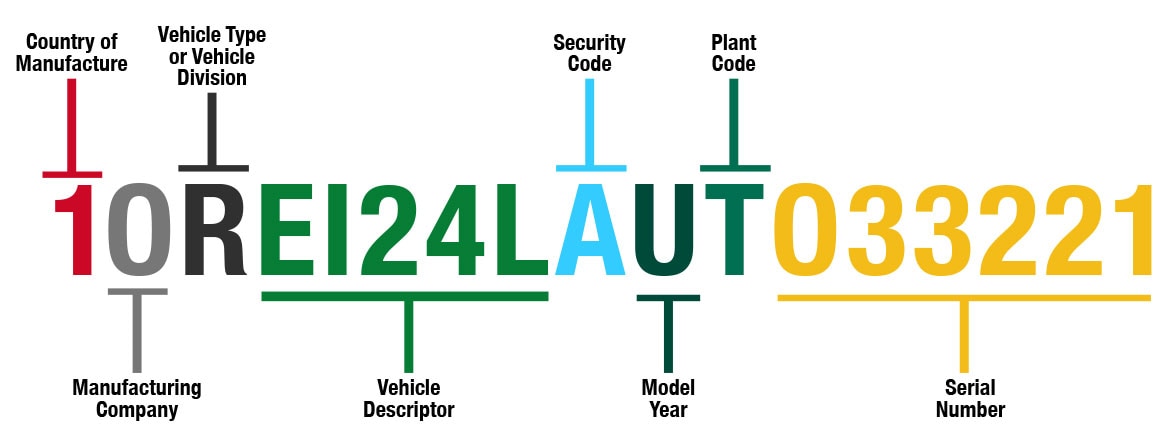
Since 1981,most vehicles use a standardized 17-character VIN that provides key details, including:
- Year of manufacture
- Make and model
- Engine type
- Trim level
- Assembly plant
- Country of origin
Each section of the VIN represents specific information about how your vehicle was built. Some digits identify the manufacturer and vehicle type, while others specify engine configuration, safety systems, and production sequence.
Why Does VIN Lookup Matter?
Using your VIN helps eliminate guesswork and ensures you get the correct parts for your vehicle.
Even small differences in engine size, trim level, or drivetrain can affect part compatibility. A VIN lookup provides precise, factory-level details that improve accuracy when ordering parts online or in-store.
his is especially important for repairs that require exact specifications, such as sensors, engine components, or emissions-related parts. Using VIN-based matching helps reduce returns, prevent installation issues, and save time during repairs.
How Do You Use the O’Reilly Auto Parts VIN Lookup Tool?
You can enter your VIN into the O’Reilly Auto Parts vehicle selector to automatically identify your vehicle.
To use the tool:
- Locate your VIN
- Select Add New Vehicle
- Choose Add by VIN
- Enter the 17-digit VIN
- Click Search
- Select your vehicle to begin shopping
Once your vehicle is saved, you’ll receive more accurate part recommendations and can quickly return to your vehicle profile for future purchases. Be sure to sign in to your account to save your selected vehicles to your garage, and you won’t have to select it again in the future.
Where Can You Find Your VIN Number?
The VIN is usually located in multiple places on the vehicle and ownership documents.
The most common locations include:
- Driver-side dashboard near the windshield
- Driver-side door jamb sticker
- A-pillar or door frame
- Vehicle title
- Insurance card
- Owners manual
On many vehicles, the VIN is visible through the windshield from outside the car, making it easy to access without opening the vehicle.
In some cases, especially with older vehicles, the VIN may also be stamped under the hood, on the frame, or on major components like the engine or transmission. Having multiple VIN locations helps verify authenticity and ensures the vehicle can be properly identified.
Where Is the VIN Located on Motorcycles, Trailers, or Boats?
Identification numbers vary depending on the type of vehicle.
Motorcycles
- Near the steering neck
- On the frame under the handlebars
- Stamped on the engine
Trailers
- On a plate attached to the front left frame
Boats
Boats use a Hull Identification Number (HIN), typically located:
- Near the stern
- On the starboard side
These identifiers serve a similar purpose to VINs by helping track manufacturing details and ownership history.
Can You Shop for Auto Parts by VIN?
Yes, using your VIN is one of the most accurate ways to find parts that fit your vehicle.
VIN-based searches help match parts for:
- Brake systems
- Batteries
- Filters
- Sensors
- Belts and hoses
- Suspension components
Because many vehicles have multiple engine or trim variations within the same model year, VIN lookup ensures compatibility and reduces the risk of ordering incorrect parts.
VIN Lookup vs. Manual Vehicle Search: Which Is Better?
VIN lookup is generally more accurate than manually selecting your vehicle.
VIN Lookup
- Uses factory-specific data
- Helps reduce fitment errors
- Best for precise repairs
- Confirms exact vehicle configuration
Manual Vehicle Search
- Uses factory-specific data
- Helps reduce fitment errors
- Best for precise repairs
- Confirms exact vehicle configuration
For most repairs, especially when fitment accuracy matters, VIN lookup is typically the better option.
Why Accurate Vehicle Information Matters
Choosing the correct parts starts with knowing your vehicle’s exact configuration. Even vehicles with the same year and model may have different engines, trims, or drivetrain options.
Accurate vehicle identification helps improve repair efficiency, reduce unnecessary returns, and ensure components function properly after installation.
The VIN Lookup tool helps simplify the process from vehicle identification to part selection. If you don’t have access to your VIN, O’Reilly Auto Parts can also help identify your vehicle using your license plate number, since registration records are connected to the VIN.
Frequently Asked Questions
Is the VIN lookup tool free to use?
Yes, the O’Reilly Auto Parts VIN Lookup tool is free to use online, even if you’re not planning on shopping.
Can a VIN tell you engine size?
Yes, a VIN can provide details about engine size, configuration, and other factory-installed features.
Do all vehicles have a 17-digit VIN?
Vehicles manufactured after 1981 use a standardized 17-digit VIN, though older vehicles may have shorter VINs that may require specific decoders or resources.
Find the Right Parts With Confidence
The O’Reilly Auto Parts VIN Lookup tool makes it easier to identify your vehicle and shop with confidence. By using your VIN, you can verify factory specifications and reduce the risk of ordering incorrect parts.
In addition to VIN-based part matching, O’Reilly Auto Parts offers helpful resources like repair guides, product support, and savings opportunities on parts, tools, and accessories. Enter your VIN online or visit your local store to find the right parts and information for your next repair.