Warning Sorry, you're using a web browser that is no longer supported. For the best experience please upgrade or visit the site on another browser.
Skip to content

How To Check & Test Antifreeze

Checking and testing antifreeze involves inspecting coolant levels and measuring its freeze point with a specialized antifreeze or coolant tester. A proper 50/50 coolant mixture protects your engine from freezing and overheating while also limiting the risk of internal corrosion. This quick check can help prevent engine damage due to overheating, and costly repairs—especially before extreme cold temperatures hit.

Antifreeze, also known as coolant, is essential for keeping your engine at a safe operating temperature in both hot and cold conditions. It circulates through the radiator and engine to prevent overheating, freezing, and internal corrosion. At O’Reilly Auto Parts, you can find the right tools and the appropriate coolant types for your vehicle to keep your cooling system reliable year-round.

Why Does Antifreeze Need to Be Checked?

Antifreeze should be checked regularly to ensure it still provides proper freeze and boil-over protection. Over time, coolant can degrade, become diluted, or turn acidic, reducing its effectiveness and potentially resulting in engine damage or poor protection.

Coolant does more than regulate temperature—it also contains additives that prevent rust and corrosion. As these additives break down, the fluid becomes acidic and can start damaging passages, as well as parts like the radiator, water pump, and heater core. Regular coolant checks help maintain both performance and long-term engine health.


What Are the Signs of Bad or Low Coolant?

Signs of bad or low coolant include engine overheating, low fluid levels, rust-colored coolant, a noticeable sweet smell, or visible leaks under your vehicle.

Low or contaminated coolant reduces your engine’s ability to transfer heat efficiently. This can cause overheating, pressure imbalances, and internal buildup. If ignored, overheating can lead to warped cylinder heads or a blown head gasket, cooling system clogs or corrosion, or even total engine failure.


Why It Matters: What Happens If You Don’t Check Antifreeze?

Skipping this simple check can turn into one of the most expensive engine repairs you’ll ever face. Coolant that freezes expands inside the engine, which can crack the engine block, damage cylinder heads, or blow freeze plugs. Even in non-freezing conditions, degraded coolant can corrode internal components and clog the system—leading to overheating, leaks, and potentially a cylinder head, head gasket, or full engine replacement.


Tools Required to Test Antifreeze

Using the right tool makes testing antifreeze quick, accurate, and repeatable. Most testers take just a few moments to determine antifreeze condition.


How to Test Antifreeze (Step-by-Step)

Our expert opens the hood of a parked Nissan Rogue Sport.

Step 1: Let Your Engine Cool

Make sure your engine has been off for a few hours or overnight. The cooling system is pressurized when hot, and opening it too soon can cause antifreeze to spray out and lead to injury.

Use the back of your hand to feel the radiator or hoses. If they’re still warm, wait longer. Once it’s cool, carefully remove the radiator cap or coolant reservoir cap.
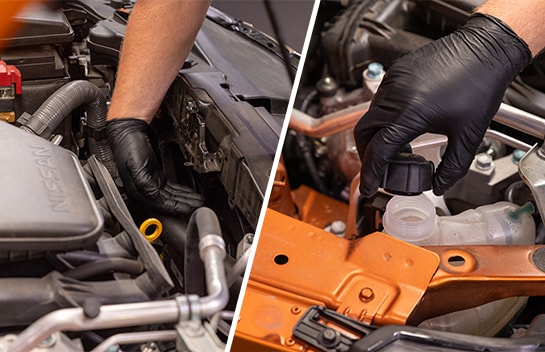
In two images, our expert uses the back of their hand to gauge the warmth from the cooling system and opens the radiator cap.

Step 2: Inspect Coolant Level

Use a flashlight to check the coolant level and condition.

If your vehicle doesn’t have an overflow tank, the level may appear slightly low to allow for expansion when the engine is at operating temperature.

Our expert uses a flashlight to inspect the coolant level.

Step 3: Check Antifreeze Condition

Look at the coolant’s appearance. It should be clean and slightly transparent.

  • If it looks milky or has particles, the system may need to be flushed. This could also point to a more serious issue that requires professional service.
  • If it looks clean, move on to checking the coolant-to-water ratio.
A close shot of the Prestone Coolant Tester with blue coolant in it.

Step 4: Test Coolant Mixture

Use a coolant tester to check the ratio of antifreeze to water. Follow the instructions for your specific tester.

Most testers use color-coded balls or a needle to show the protection level and mixture ratio. This helps you confirm whether your coolant provides adequate freeze and boil-over protection. If the mixture is off, adjust it by adding the correct type of coolant or distilled water as needed.

In three images, our expert uses the bulb and tube attached to the coolant tester to check the freeze and boil-over point.

Step 5: Check Freeze & Boil Protection

Draw coolant into the tester using the bulb and tube, then read the gauge.

  • A proper mix typically protects down to about -34°F and up to 265°F.
  • If readings fall outside this range, you may need to adjust the mixture by adding coolant or water.
In two images, our expert pour fresh coolant into the cooling system.

Step 6: Add or Adjust Coolant

If the level is low but the mixture is correct, top it off with the recommended coolant.

If the mixture is off:

  • Add pure antifreeze to strengthen protection
  • Add distilled water to dilute if needed
Our expert replaces the cap to the cooling system.

Step 7: Replace the Cap

Once everything is checked and adjusted, securely reinstall the radiator or reservoir cap.

What Is the Ideal Antifreeze Mixture?

The ideal antifreeze mixture is a 50/50 ratio of coolant and distilled water, which typically protects down to -34°F and up to 265°F. If coolant concentration drops below 40%, freeze protection weakens. Above 60%, heat transfer efficiency decreases, increasing the risk of overheating.

Pre-mixed coolant eliminates guesswork, while concentrated formulas require precise dilution using distilled water to avoid mineral buildup and scaling. Ensure your coolant is suitable for your local winter or summer conditions, and flush and fill your cooling system or add coolant or distilled water as necessary to achieve the proper mix.


Antifreeze Types Comparison

Product Comparison Table
Type Benefits Downsides Best For
Pre-Mixed 50/50
Ready to use, no measuring Slightly more expensive by coolant volume Quick top-offs and convenience
Concentrated Coolant
Adjustable ratio and less expensive by volume Requires mixing Extreme climates or custom needs
Universal Coolant
Compatible with many vehicles Not always OEM-specific or may lack certain OE requirements General maintenance
OEM-Specific Coolant
Exact manufacturer match Higher cost Newer or specialized vehicles

How to Choose the Right Coolant

Choose coolant based on your vehicle manufacturer’s specifications, your climate, and whether you prefer pre-mixed or concentrated formulas.

Different cooling systems require specific chemistries such as OAT, HOAT, or IAT. Using the wrong coolant can lead to chemical incompatibility, reduced performance, or internal damage. Always check your owners manual or consult the parts professionals at O’Reilly Auto Parts to make the right choice. You can also learn more about the different types of antifreeze formulas in our How-to Hub.


When Should You Seek Professional Help?

You should seek professional help if you notice persistent overheating, coolant leaks, or contamination, like oil, in the coolant.

These issues often signal more serious problems, such as a blown head gasket, radiator failure, or internal engine damage. Addressing them early can prevent more expensive repairs and keep your vehicle running safely.


Frequently Asked Questions

How often should I check my antifreeze?

Check your coolant every 3 to 6 months or before extreme weather seasons.

Can I use water instead of coolant?

Water alone does not provide freeze protection or corrosion resistance and should only be used temporarily in emergency situations.

To what temperature should antifreeze protect my vehicle?

Most coolant should protect down to at least -34°F, but colder climates may require a stronger antifreeze mixture.


Make Sure Your Engine Is Protected Year-Round with O’Reilly Auto Parts

Testing your antifreeze regularly is one of the easiest ways to prevent overheating, freezing, and long-term engine damage. By maintaining the correct coolant level and a 50/50 mixture, you can keep your vehicle running reliably in any season. For the right tools, coolant options, and expert advice, visit O’Reilly Auto Parts. Our parts professionals can help you get the job done with confidence.


Additional Resources

Checking your coolant health is essential for preventing overheating, freezing, and protecting your engine against damage. Regular antifreeze checks are key to preventing engine damage from extreme temperatures. O’Reilly Auto Parts has the coolant testers, antifreeze, refractometers, funnels, and more to help you maintain your vehicle’s cooling system and keep your engine running and cool in any season. Visit our How-To Hub for helpful articles including the types and colors of antifreeze, what causes a car to overheat, cooling system basics, and much more to help you protect and extend the life of your vehicle.

The automotive repair work depicted in this series is performed under the direction of the manufacturer of the product featured. Prior to undertaking any of the demonstrated repairs on your vehicle, we suggest you consult with a certified mechanic or another professional who can adequately advise you of the proper repair or remedy required. O’Reilly Automotive Stores, Inc. and its affiliates (“O’Reilly”) disclaims any responsibility for injury or damage resulting from a viewer’s attempt to recreate the repairs shown in this series.