
 Safety Glasses
 Nitrile Gloves
 Radiator Hoses
 Ratchets
 Sockets
 Coolant
 Torque Wrench
Today we’ll be changing the radiator hoses on this 2012 Ford F-150, and procedures will be similar on a lot of 5-liter F-150s from 2009 to 2014, but be sure to know the specifics for your truck before getting started. If you’re not completely comfortable doing this yourself, we would be happy to recommend a professional technician in your area. Once you’ve got your supplies together, here’s what you’ll do:
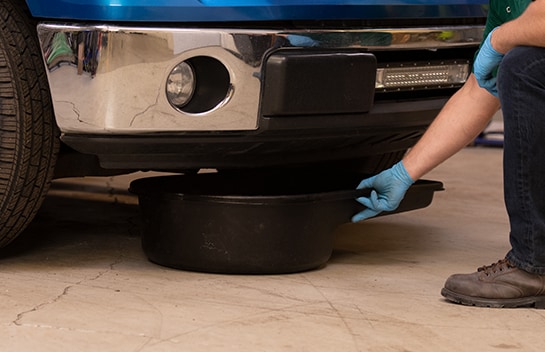
Step 1: Place the Drain Pan Under the Truck
Wait for the engine to cool down, then place a fluid catch pan under the radiator petcock.
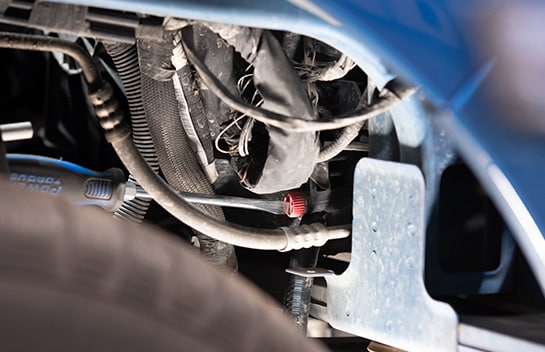
Step 2: Open the Radiator Petcock
Open the petcock and allow the coolant to drain into the drain pan.

Step 3: Remove the Air Intake Tube
Open the hood and disconnect the hoses and electrical connector, then remove the air intake tube.

Step 4: Loosen the Radiator Hose Clamps
To replace the upper radiator hose, loosen the hose clamps at the radiator inlet and the water outlet on the engine.

Step 5: Remove the Upper Radiator Hose
Pull the radiator hose free from the radiator inlet and the engine.
|
Do It Right: In some cases, you may need to use a pick, screwdriver, or something similar to break the seal between the hose and the radiator. If you’re not planning to reuse the hose, it can also be split to allow it to be removed more easily. |

Step 6: Install the New Upper Radiator Hose
Now you can use your new hose and hose clamps and position the hose over the engine water outlet, then over the radiator inlet. Tighten the clamps to the manufacturer’s specifications.

Step 7: Detach the Lower Radiator Hose Clamps
Detach the spring clamp at the thermostat housing outlet, then loosen the hose clamp over the radiator.
|
Do It Right: The lower radiator hose on your F-150 not only connects the radiator to the water pump, but also has provisions for the oil cooler. |

Step 8: Loosen the Hose Clamps at the Radiator
After detaching the spring clamps from the thermostat housing, loosen the hose clamp at the radiator.
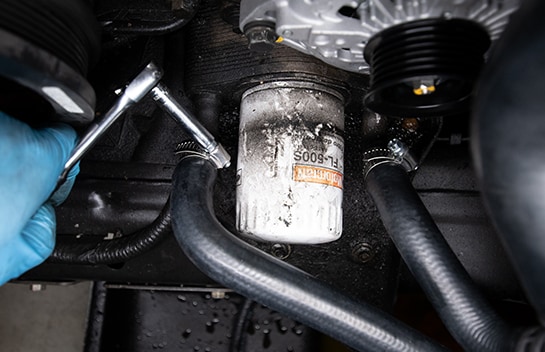
Step 9: Remove the Oil Cooler Inlet and Outlet Hoses
Remove the clamps from the oil cooler inlet and outlet hoses, then remove the hoses.

Step 10: Remove the Lower Radiator Hose from the Housing
Now you can remove the hose from both the thermostat housing and the radiator.
|
Do It Right: As before, you may need to use a pick or screwdriver to loosen the radiator hose from the radiator, or you may just cut the hose since it will be discarded anyway. |

Step 11: Install the New Lower Radiator Hose to the Radiator
Install the new lower radiator hose to the radiator with a new clamp and tighten to manufacturer’s specifications.

Step 12: Install the New Lower Radiator Hose to the Thermostat Housing
Reinstall the thermostat outlet hose and re-engage the spring clamp.

Step 13: Reinstall the Oil Cooler Inlet and Outlet Hoses
Install the oil cooler inlet and outlet hoses with new clamps and tighten to manufacturer’s specifications.

Step 14: Refill Your Cooling System
Fill your cooling system and start your F-150 to check for leaks. Remove your drain pan, start your vehicle, and let it warm up to operating temperature with your heater on. If the heater is blowing warm air, turn the truck off and check your coolant level. Add coolant as needed, and close the hood.


